 A Picture is Worth a Thousand Words – Vitamin D Deficiency in Alpacas
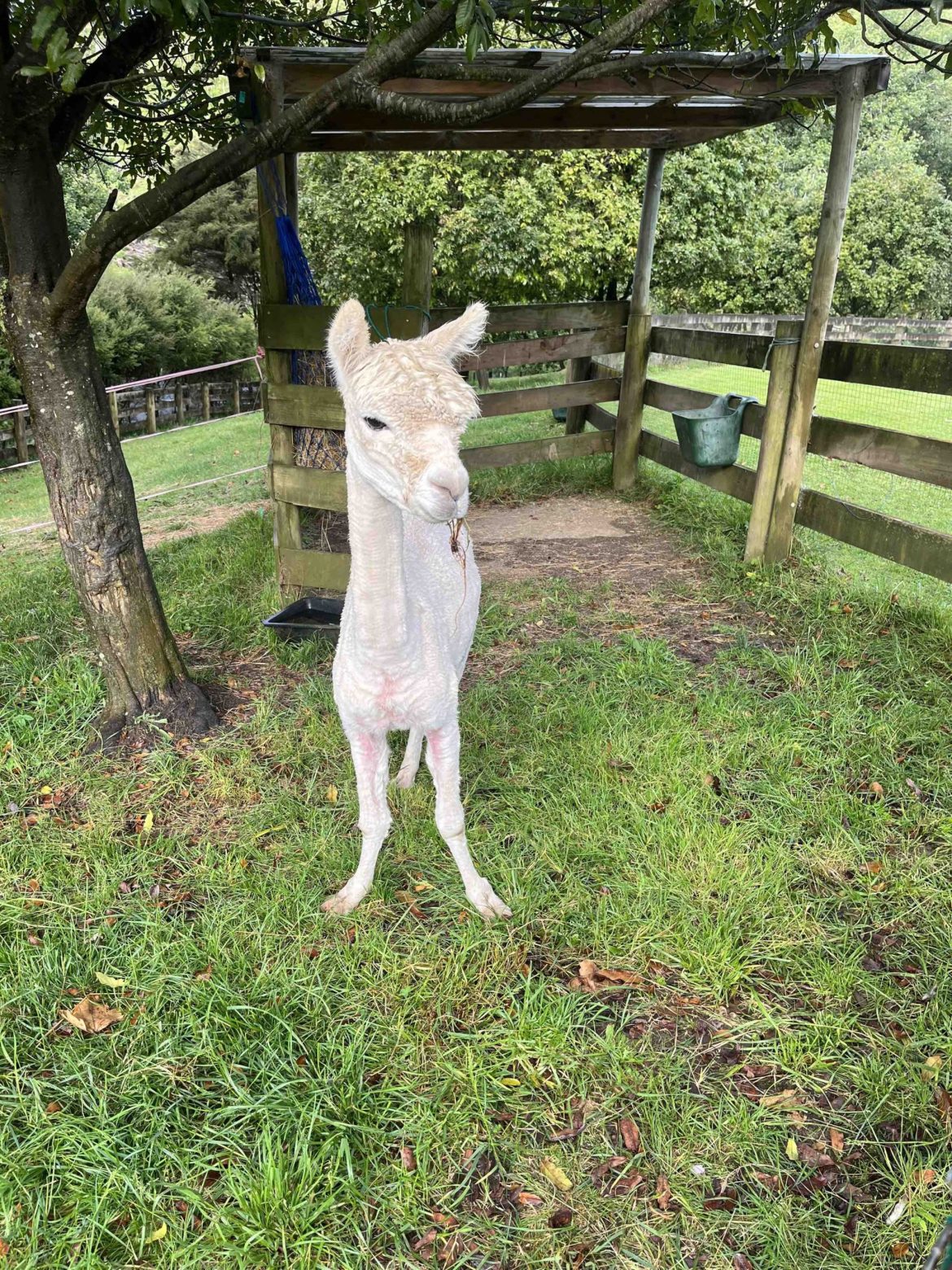
The white alpaca in this photograph is just three years old yet the shape of his front legs tells the story of a nutritional deficiency that occurred during the most important period of his growth.
During the first 18 months of his life, he received one vitamin D injection each year at shearing (October/November). While this was done with the very best intentions, we now know that annual supplementation at shearing is simply not enough to maintain adequate vitamin D levels throughout New Zealand’s autumn and winter.
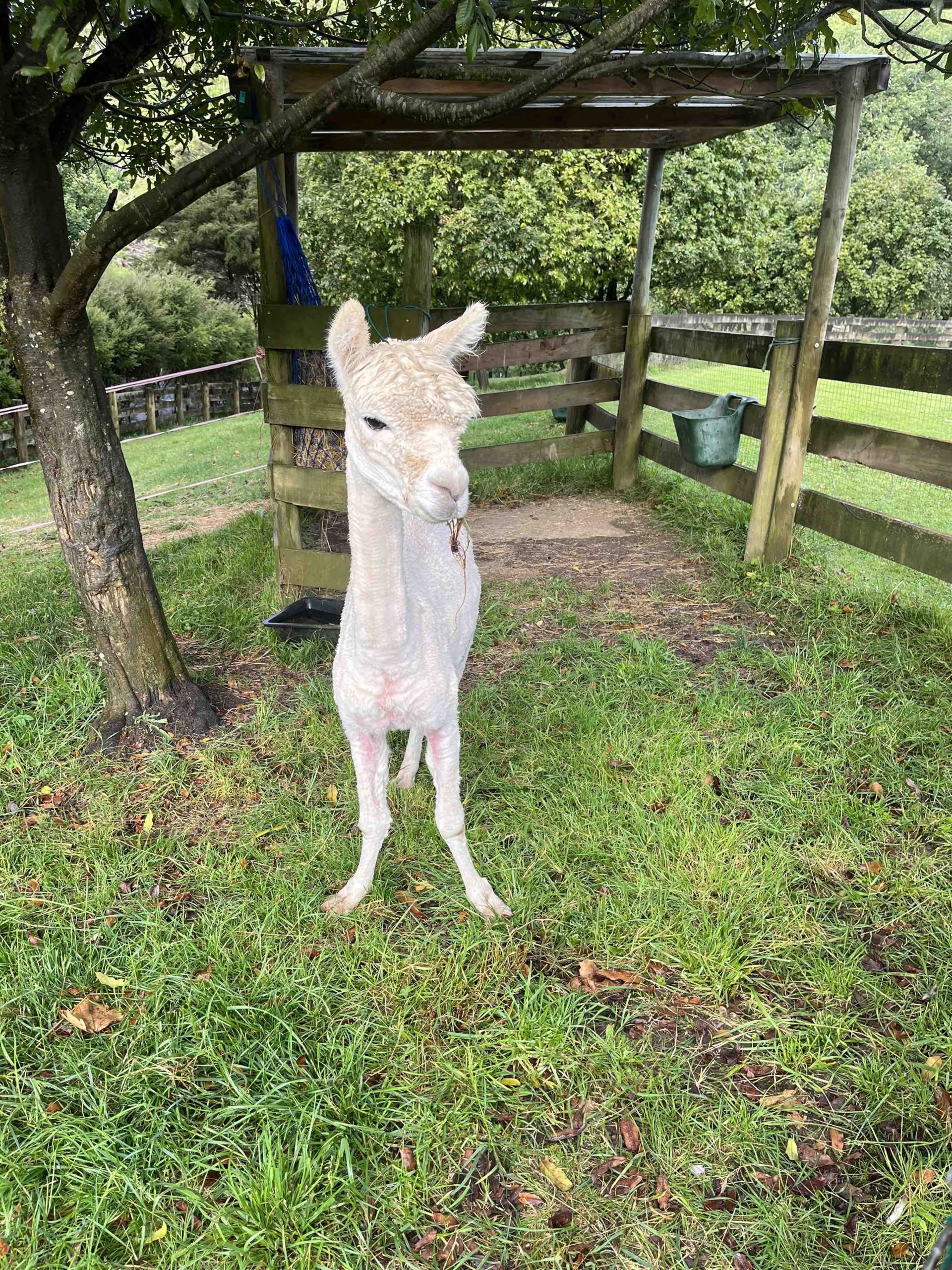
The result is what veterinarians refer to as rickets.
If you look closely, you’ll notice that from the knees down, both front legs angle outwards, giving him a characteristic “seal-like” stance with turned-out feet. This angular limb deformity becomes particularly obvious after shearing, when the fleece no longer hides the shape of the legs.
So why does this happen?
Alpacas have higher vitamin D requirements than domestic ruminants. This is thought to be because they evolved in high-altitude environments such as the Andes Mountains, where ultraviolet (UV) light exposure is far greater than it is in New Zealand. Ultraviolet light is essential for the skin to synthesise vitamin D, and as a result, alpacas are particularly susceptible to deficiency when UV exposure is limited.
Young, growing alpacas have the highest vitamin D requirements, but animals with darker skin pigmentation, a heavy fleece, or those not sufficiently exposed to UV light are also at increased risk. During New Zealand’s autumn and winter months, blood vitamin D concentrations can fall dramatically—down to approximately one-sixth of the levels typically seen during summer if supplementation is not provided.
Vitamin D is essential for calcium and phosphorus metabolism and the normal mineralisation of growing bone. Without adequate vitamin D during this critical period, growing bones fail to mineralise properly. As young alpacas gain weight, these weakened bones gradually bend under normal weight-bearing forces, resulting in the angular limb deformities we recognise as rickets.
Unfortunately, the consequences don’t end there.
These animals spend the rest of their lives walking on limbs that are no longer straight. The abnormal alignment places uneven forces through the joints every time they move, increasing wear and tear and predisposing them to early-onset arthritis, chronic discomfort and reduced mobility. From a welfare perspective, this is particularly sad because it is almost entirely preventable.
 Our recommendation is to supplement alpacas throughout the period when they are at risk of deficiency—not just once a year at shearing.
For New Zealand conditions, we generally recommend supplementation between April and September, with:
 A minimum of two vitamin D injections spaced evenly through autumn and winter.
 Three injections (our gold standard) for growing alpacas under three years of age and other animals at higher risk.
Young alpacas born during autumn and winter require particular attention, as do pregnant females, which benefit from appropriate supplementation before giving birth to help support both themselves and their developing cria.
One thing we’ve noticed over the years is that once you know what to look for, you start seeing it everywhere. After shearing, take a careful look through your herd. Do any alpacas have knocked knees, turned-out feet or an unusual stance? While not every angular limb deformity is caused by vitamin D deficiency, it’s certainly something worth investigating.
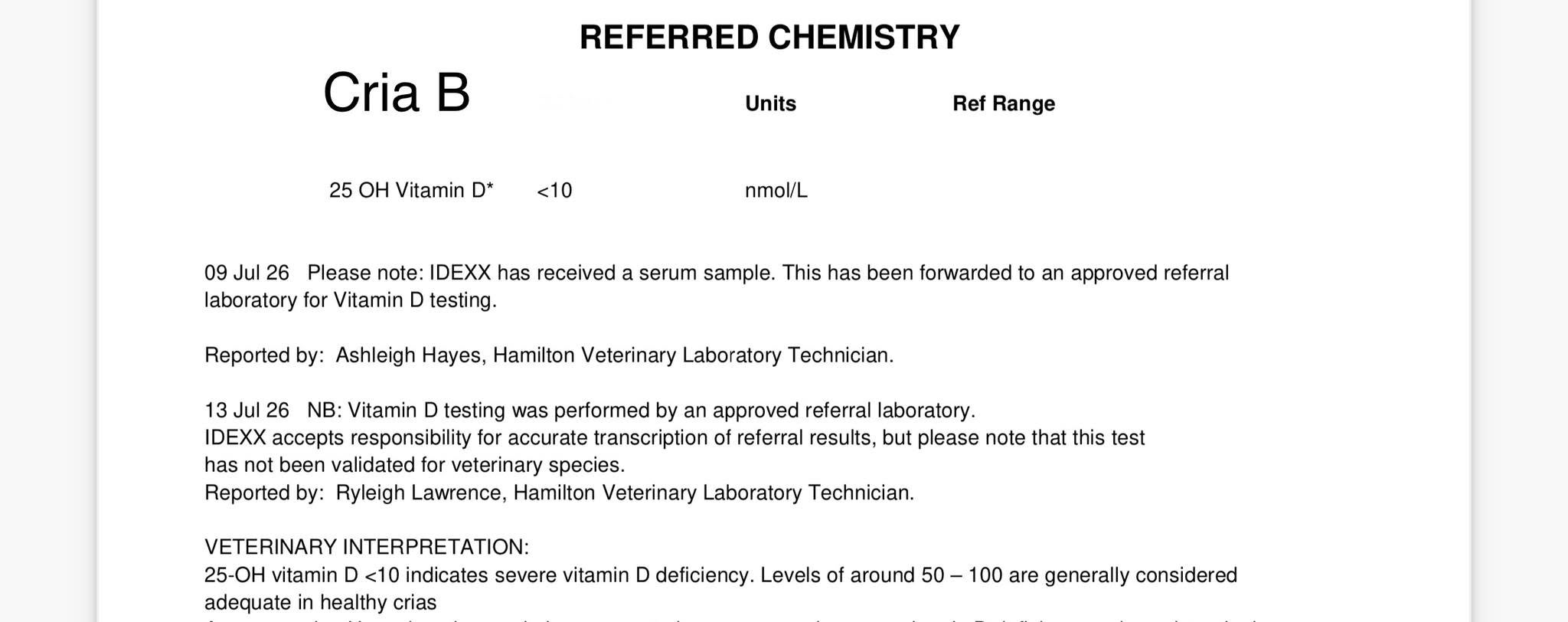
Have a look at the blood test results we’ve included from a recent case (a few weeks ago) with severe vitamin D deficiency. In severely deficient alpaca we often find concurrent fracture of ribs and vertebral segments, which is heartbreaking.
If you’d like to learn more, we’ve written a series of detailed posts on The Lifestyle Vet Facebook page covering vitamin D deficiency, recommended supplementation schedules, dosing, blood testing and real-life clinical cases. Every post is supported by current scientific literature and peer-reviewed research, with practical advice tailored to New Zealand alpaca owners.
 Preventative healthcare is always kinder than treating preventable disease. If you’d like advice on vitamin D supplementation or our annual alpaca healthcare plans, we’d love to help.
 027 838 5433
 info@thelifestylevet.co.nz
The Lifestyle Vet – Providing an exceptional level of veterinary care for your alpacas.
Categories:The Lifestyle Blog
0 Likes